

Stepping into a casino for the initial time, whether a land-based location or a virtual platform, can feel like walking into a foreign country where everyone uses a natural jargon of chips, cards, and rotating reels https://coolcatscasino.org/. I recollect that specific impression of being swamped by the raw volume and tempo of it all. The objective here is not to offer you a fantasy of quick fortunes, but to serve as a patient interpreter. I want to deconstruct the complexity of classic casino games, stripping them down to their basic rules and the numerical facts that control them, so you can traverse the encounter with insight rather than bewilderment.
The Unshakeable Foundation of Table Games and Their Live Evolution
Table games are the cloth-based backbone of any gambling institution, where strategy meets chance and the house edge is typically at its most obvious. Unlike the individual nature of slots, these games carry a social aspect, even in digital live-dealer formats. You are not just playing against an system; you are engaging with fixed mathematical probabilities and, often, a human operator. Understanding this category is the first step toward becoming a literate gambler rather than a button-pressing novice.
Every marking on a table serves a purpose beyond aesthetics. The numbered pockets on a roulette wheel or the specific boxes on a blackjack felt dictate payout odds and the house edge. Beginners often disregard these printed rules, assuming they are mere decoration. That is a error. The text on the felt tells you if blackjack pays 3 to 2 or a far less beneficial 6 to 5. It states the minimum and maximum bets. Learning to read the table instantly improves your security, preventing you from accidentally sitting down at a game with rules designed to drain your bankroll more quickly.
The casino advantage is the most crucial term in this guide. It is not a charge you incur, but the built-in edge the casino holds. If a game has a 2% house edge, the casino expects to keep two dollars for every 100 units wagered over an endless period. This does not imply you are unable to win in the short term. Variance, the statistical term for luck, permits wild swings. But the built-in edge ensures the casino remains profitable. Every decision you make should be viewed through the goal of lowering this edge.
Live dealer games close the divide between the solitary digital experience and the genuine social feel of a land-based venue. A real human dealer in a studio handles real cards or a real wheel, and the gameplay is broadcast to your device in HD. I find this format resolves a fundamental trust issue some players have with Random Number Generators. Watching a real card drawn from a shoe delivers a mental reassurance that a digital animation cannot replicate, even if the numerical outcome is the same.
The interface overlay makes the experience practical. You watch the video stream of the dealer, but you also see a digital betting layout where you click to place chips. A chat box enables you to communicate with the dealer and sometimes other players, restoring the social banter absent in standard online table games. Live dealers operate on a schedule and deal at a slower pace than a solo digital game. This slower pace automatically limits your hands per hour, which is a built-in responsible gaming tool, decreasing the speed at which the house edge wears against your bankroll.
However, live dealer games commonly have higher minimum bets than their purely digital counterparts. Running a studio with human staff is expensive, and those costs are transferred to the player. You will hardly ever find a live blackjack table for a one-dollar minimum bet. Furthermore, the game rules in a live studio are fixed; you cannot simply change to a variant with a better pay table as you can with video poker. The experience focuses on immersion and trust over the razor-thin margins and ultra-low stakes available in the standard digital lobby.
Baccarat and the Grace of the Dual Choice
Baccarat has an unfair standing as an intimidating, high-roller-only pursuit. In truth, it is without doubt the simplest card game in the house, demanding zero skill or decision-making after you put down your stake. You are just betting on which one of two hands, the Player or the Banker, will reach a total nearest to nine. I appreciate its simplicity; it is a binary coin flip with a very small house edge, obscured by complex drawing rules that you, as the participant, never have to remember because the croupier carries out them automatically.
The drawing procedures are fixed and unchangeable. If either side reaches an eight or nine from the opening two cards, it is a automatic win and no more cards are drawn. If not, a detailed chart dictates whether the Player hand takes a third card, and afterwards whether the Banker hand draws. The appeal is that this complexity is completely the dealer’s responsibility. Your only task is to select a hand. I often watch novices stress over the third-card procedures, assuming they have to understand them to win. You need not. The system works like clockwork, like a clock, regardless of your comprehension.
The most practical tip I can offer for baccarat is to avoid the Tie bet entirely. It is a sucker’s bet, without question. While the Player bet comes with a house edge of approximately one point two four per cent and the Banker bet a minuscule one point zero six percent, the Tie bet jumps to over fourteen % in most formats. The payout of eight-to-one is a dangerous attraction. I regard betting on the Banker and covering the standard five per cent commission on wins as the statistically correct strategy. It is boring, it is repetitive, but it is the closest you will achieve to a even contest against the establishment.
Video-poker and the Skill Element

Video poker occupies a unique liminal space between slots and table games. It looks like a slot machine, but it plays like a draw poker game where your decisions directly change the outcome. You receive five cards, you choose which to hold and which to discard, and the replacement cards determine your final hand. I consider it the thinking person’s machine game because the house edge can be practically erased, or even tipped in the player’s favor, if you perform flawlessly on the right pay table. It is the only machine-based game where the screen shows you the exact odds of your game.
The pay table is the agreement you are signing. It reveals exactly how many coins you win for each hand, from a pair of Jacks up to a Royal Flush. The most well-known variant, Jacks or Better, needs a 9/6 pay table to be regarded as full-pay. This signifies a full house pays nine coins and a flush pays six for a single coin bet. A apparently small reduction, like an 8/5 pay table, substantially raises the house edge. You have to learn to scan the pay table before inserting money. It is the single honest signal the machine provides about its mathematical tightness.
Playing video poker correctly demands a strategy chart, and unlike blackjack, you can permissibly use one while you play online. The decisions are not constantly intuitive. For instance, holding a low pair over a four-card flush is often the mathematically optimal move, even though the flush appears nicer. I view video poker as a discipline. It compensates patience and penalizes hunches. The return is directly linked to the accuracy of your draw decisions. If you are ready to learn a fairly straightforward set of rules, you can play a game where the house advantage is often below zero point five percent, a scarcity in any casino.
Slot Machines and the Digital Reels
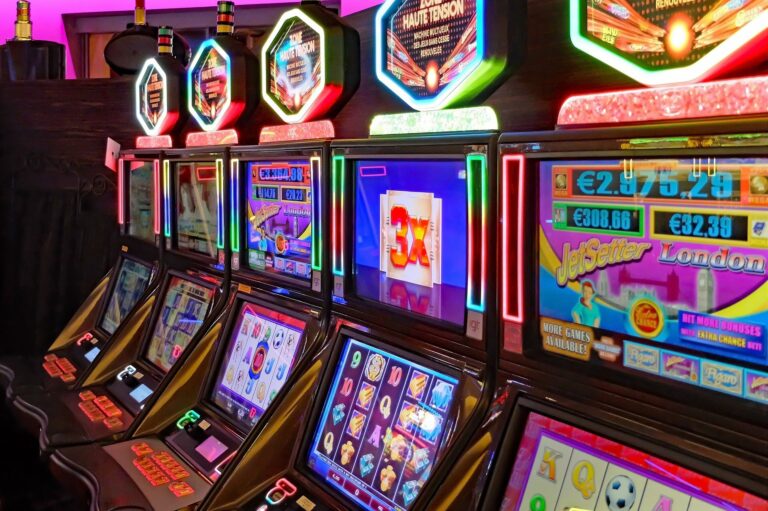
Slot machines have seen a dramatic transformation from classic lever machines to complex digital entertainment hubs, yet the core principle remains unchanged. You are wagering on a random number generator to match symbols on a payline. I think that the modern video slot, with its falling reels, multi-level bonus games, and branded themes, often hides the simple math underneath. A slot is not a game of skill; it is a lottery draw that happens instantly, and the primary variable you control is the volatility you choose to experience.
Return to Player, or RTP, is the term you must focus on. It is the theoretical percentage of all wagered money a slot machine will pay back over millions of spins. A game with a ninety-six percent RTP theoretically returns ninety-six dollars for every hundred wagered. The remaining four percent is the house edge. I always recommend checking the game’s information screen for this figure. A difference of just one or two percent in RTP has a substantial impact on your session’s longevity. High RTP slots are not necessarily looser in the short term, but they give you more flexibility against variance.
Volatility, or variance, determines the rhythm of your play. Low-volatility slots pay out common but small wins, often keeping your balance steady. High-volatility slots are the opposite; they can drain your credits for long stretches, only to explode with a massive win that makes up for the drought. I see beginners make the mistake of playing high-volatility games with a small bankroll, only to be wiped out before the bonus round triggers. Matching your bankroll to the game’s volatility is vital. If you have twenty dollars, a low-volatility game lets you play for an hour. A high-volatility game might last five minutes.
The roulette wheel and the Beauty of the Wheel
Roulette reduces gambling down to its simplest, most striking form. There is no decision-making once the ball is in motion; it is a game of pure chance where you are betting on where a small ivory ball will land on a spinning, numbered wheel. I find its grace lies in the vast spectrum of risk you can select. You can bet on a one number for a big win or bet on almost the entire board for a near-guaranteed, albeit small, profit. The wheel is a concrete example of probability, and understanding the layout is the key to deciphering it.
The crucial distinction beginners must understand immediately is the difference between European and American roulette. The European wheel contains thirty-seven pockets, numbered zero through thirty-six. The American wheel includes a double-zero pocket, bringing the total to thirty-eight. This might seem like a small addition, but it practically doubles the house edge. On a single-number bet, the European house edge is a moderate two point seven percent. On an American wheel, it climbs to a harsh five point two six percent. I will invariably, without reservation, steer a beginner toward the single-zero wheel. It is the same game with significantly better survival odds.
Playing on the outside of the layout gives the most secure harbor for a newcomer. These are the red or black, odd or even, and high or low wagers. They offer even money, so you multiply by two your bet if you win. While the payout is less exciting than a straight-up hit, these bets encompass a big part of the wheel, giving you a flow of small wins and losses that lengthens your playing session. I view them as a way to extend play, to learn the flow of the croupier and the speed of the wheel without the drastic financial swings that come from pursuing single numbers.
Twenty-One and the Pursuit of Twenty-One
Blackjack stays the most democratic game on the casino because it places you directly against the dealer with no opponents impacting your hand. Your aim is deceptively simple: construct a hand total nearer to twenty-one than the dealer without going over it. Number cards have their face value, face cards are equal to ten, and an ace shifts between one and eleven. I view this adaptability of the ace as the soul of the game; it offers the flexibility that allows for aggressive strategy without instant busting.
The dealer’s rigid constraints are your primary weapon. The dealer has no discretion. They have to draw cards until they attain a hard total of at least seventeen, and they must stand when they arrive. Some tables require the dealer to hit on a soft seventeen. This rule change is critical because it raises the house edge. I always suggest seeking tables where the dealer stands on all seventeens. It indicates a player-friendly environment. Your strategy, thus, hinges wholly around exploiting the dealer’s expected behavior while controlling your own risk of busting.
I cannot discuss blackjack without addressing basic strategy, which is not card counting but a purely safeguarding mathematical chart. It dictates the most favorable move for every conceivable player hand against every possible dealer up-card. Should you hit a sixteen against a dealer’s ten? Basic strategy says yes, regardless of the fear of busting, because the math shows you lose less money in the long run by hitting than by standing and hoping the dealer busts. Learning this chart shrinks the house edge to less than half a percent, rendering blackjack the most equitable game in the house for the prepared mind.
Správa bankrollu and the Practice of Dlouhověkost
I have saved the most critical lesson for last because it underpins every single game mentioned above. Without bankroll management, mastery of strategy is useless. Your bankroll is not just the money you are prepared to win; it is the money you have clearly set aside as the cost of your entertainment. I see it as a ticket price. You do not walk into a theme park and feel devastated that you spent money on admission. A casino visit, whether online or physical, should carry the same emotional detachment. The funds are spent the moment you deposit them; any withdrawal is a bonus.
The principles of managing a bankroll are basic but require firm discipline. I argue for a session limit, a stop-loss point where you walk away regardless of how due you feel a win is. The concept of being due is the gambler’s fallacy, the incorrect belief that past independent events affect future ones. A roulette wheel that has landed on black ten times in a row is not due for red. The odds reset to exactly the same probability on the eleventh spin. Setting a firm loss limit safeguards you from chasing this illusion and digging a financial hole that entertainment cannot justify.
Just as crucial is the win goal. It seems counterintuitive to stop when you are winning, but the math of the house edge shows that the longer you play, the closer your results will trend toward the expected loss. A short session that produces a moderate profit is a mathematical victory. I suggest dividing your session bankroll into smaller units to avoid betting too large a percentage on a single hand or spin. A good rule of thumb for table games is to have at least twenty to thirty units of your average bet size. This cushion allows you to weather the natural variance without being wiped out by a short, predictable losing streak.
Here are the non-negotiable rules I follow to keep the entertainment sustainable:
- Set a hard loss limit before you start and never exceed it, no matter how tempting a comeback seems.
- Define a win goal and walk away once you reach it; the longer you play, the more the house edge works against you.
- Divide your session bankroll into at least twenty betting units so a single cold streak does not end your play prematurely.
- Never chase losses by increasing bet sizes; that transforms a controlled expense into an emotional spiral.
- Consider every deposit as a sunk entertainment cost, not an investment expecting a return.
The true skill in classic casino gaming is certainly not predicting outcomes, but controlling your own behavior. The games are crafted with mathematical precision, and they will operate exactly as programmed regardless of your mood, your system, or your lucky charm. By grasping the rules, seeking out the best pay tables, and viewing your bankroll as a finite entertainment expense, you transition from being a passive participant to an informed consumer. The goal is never to guarantee a win, which is impossible, but to guarantee that you obtain exactly the experience you paid for, no more and no less, and to leave the table with your dignity and financial health intact.